

Sustainability · 2025
In this section50 topics
- Sustainability Policy2 items
- Sustainability Goals & UN SDGs3 items
- Policy Review3 items
- Business Value Chain1 item
- Stakeholder Analysis1 item
- Environmental Policy & Guidelines3 items
- Environmental Policy Review3 items
- Energy — Plan & Guidelines2 items
- Energy — Electricity Consumption1 item
- Energy — Fuel Consumption1 item
- Energy — Targets2 items
- Energy — Performance & Outcomes2 items
- Water — Plan & Guidelines2 items
- Water — Withdrawal, Discharge & Consumption1 item
- Water — Targets2 items
- Water — Performance & Outcomes2 items
- Waste — Plan & Guidelines2 items
- Waste — Generation, Disposal & Recycling1 item
- Waste — Targets2 items
- Waste — Performance & Outcomes2 items
- GHG — Plan & Guidelines2 items
- GHG — Emissions1 item
- GHG — Emissions Verification1 item
- GHG — Principles & Standards1 item
- GHG — Targets1 item
- GHG — Performance & Outcomes1 item
- Environmental Legal Incidents1 item
- Other Environmental Management1 item
- Social Policy & Guidelines4 items
- Social Policy Review3 items
- Social — Principles & Standards Practised1 item
- Human Rights Due Diligence2 items
- Employees — Plan & Guidelines3 items
- Employees — Workforce1 item
- Employees — Remuneration & Provident Fund1 item
- Employees — Training & Development1 item
- Employees — Occupational Health & Safety1 item
- Employees — Labour Relations1 item
- Employees — Employee Representation1 item
- Employees — Targets2 items
- Employees — Performance & Outcomes2 items
- Customers — Plan & Guidelines3 items
- Customers — Satisfaction Results1 item
- Customers — Targets2 items
- Customers — Performance & Outcomes2 items
- Community & Social — Plan & Guidelines3 items
- Community & Social — Targets2 items
- Community & Social — Performance & Outcomes2 items
- Other Social Management1 item
- Law Violation Incidents1 item
Sustainability Policy
Has a Sustainability Policy
Yes
Policy Description
The company is committed to conducting business for long-term sustainable growth, which must be built upon good governance. It operates according to the company's good corporate governance policy to support the achievement of its vision and mission, focusing on transparent and fair operations, aiming to generate benefits and grow appropriately with all stakeholders. It also considers economic, social, and environmental issues as crucial to drive the company's sustainable development. Therefore, policies have been established considering key economic, social, and environmental factors, and recognizing all stakeholder groups, in accordance with international guidelines and those set by the Securities and Exchange Commission of Thailand, as detailed below:
Economic Dimension
The company is committed to achieving stable and sustainable business growth, continuously developing and seeking business opportunities. It embraces modern technology to create a competitive advantage, with the goal of delivering long-term value to shareholders and providing construction projects that meet standards and contractual agreements with clients (in line with the United Nations Sustainable Development Goals: SDGs: 1 No Poverty / 8 Decent Work and Economic Growth).
Guidelines
Customer-centric approach, comprehensively meeting customer needs.
Manage quality and safety, maintaining professionalism and operational excellence.
Continuously committed to creating quality and standards in construction work, applying modern technology to business operations.
Social Dimension
The company always recognizes that sustainable business growth is built upon a strong societal foundation. Therefore, it prioritizes social operations. The company's social responsibility is not limited to internal personnel but also extends to external society, including partners, customers, communities, and the overall social conditions of the country. The goal is to improve the overall quality of life for people in society (SDGs: 3 Good Health and Well-being / 16 Peace, Justice, and Strong Institutions).
Guidelines
Treat employees with fairness and care
Personnel development within the organization.
Ensure employee health and safety.
Public Benefit Operations
Accept complaints and have mechanisms to protect whistleblowers.
Environmental Dimension
The company will undertake building construction, considering the environmental impact, and support all sectors in Thailand in conserving nature and the environment for sustainable existence. The goal is to maintain a balance between economic growth and minimizing environmental impacts associated with project construction in the most appropriate manner.
Guidelines
Utilize various technologies and innovations in building construction to help reduce environmental impacts.
Implement policies for resource conservation and reduction, and waste reduction.
Foster awareness and an organizational culture for environmental conservation.
Sustainability Goals & UN SDGs
Has Sustainability Goals
Yes
Goals Description
The company recognizes the importance of operating its business responsibly towards the environment, society, and good governance (ESG) to achieve stable growth and create long-term value for all stakeholders. Therefore, the company has set the following sustainability goals:
Environmental Goals (Environment )
Vision : Reduce environmental impact from construction work and enhance resource efficiency
Aligned with SDGs : 6, 7, 9, 11, 12, 13, 15
Topic | Goal / Commitment | KPI | Target Year |
Greenhouse Gas Emissions | Develop organizational carbon footprint covering all departments | Complete GHG Inventory Scope 1&2 database | 2026 |
Reduce GHG emissions per working hour | Reduced by 1% from 2025 baseline | 2030 | |
Energy Consumption | Increase energy efficiency in offices and construction sites | Reduce electricity consumption/site area by 2% | 2027 |
Construction Waste | Increase recycling/reuse proportion | Not less than 5% | 2028 |
Biodiversity | 100% impact assessment in risk areas | Complete EIA / Biodiversity Screening reports | Ongoing Annually |
Social Goals
Vision : Drive safety, fair labor, and professional skill development
Aligned with SDGs : 3, 4, 5, 8, 10, 11, 16
Topic | Goal / Commitment | KPI | Target Year |
Safety | Zero severe accidents in all projects | LTI = 0 | Ongoing Annually |
Safety Training | 100% of employees/workers trained before starting work | Training coverage rate = 100% | Ongoing Annually |
Human Rights | HRDD covers key supply chains | Supplier Risk Screening ≥ 20% | 2030 |
Develop labor skills | Increase average employee training hours to 8 hrs./year | Training Hours per person | Ongoing Annually |
Community Engagement | Promote social engagement around construction areas | All projects | Ongoing Annually |
Governance Goals ( Governance )
Vision : Operate business transparently, verifiably, and with good governance
Aligned with SDGs : 5, 8, 9, 12, 16, 17
Topic | Goal / Commitment | KPI | Target Year |
Governance and Transparency | Strictly adhere to the SET CG Code | Excellent CG Rating Checklist score | Ongoing Annually |
| 100% communication of anti-corruption policy | Employees/partners fully aware of policies | 2026 |
Risk Management | Regularly review Risk Register and Risk Appetite | 100% reporting to the Board of Directors | Ongoing Annually |
Supply Chain Sustainability | Screening ESG Criteria for key Suppliers | ≥ 10% | 2030 |
UN SDGs aligned with the organization's sustainability management goals :
Goal 1 No Poverty |
UN Sustainable Development Goals
| SDG Goal |
|---|
| Goal 1 No Poverty |
| Goal 1 No Poverty |
| Goal 1 No Poverty |
| Goal 2 Zero Hunger |
| Goal 2 Zero Hunger |
| Goal 2 Zero Hunger |
| Goal 3 Good Health and Well-being |
| Goal 3 Good Health and Well-being |
| Goal 3 Good Health and Well-being |
| Goal 4 Quality Education |
| Goal 4 Quality Education |
| Goal 4 Quality Education |
| Goal 5 Gender Equality |
| Goal 5 Gender Equality |
| Goal 5 Gender Equality |
| Goal 6 Clean Water and Sanitation |
| Goal 6 Clean Water and Sanitation |
| Goal 6 Clean Water and Sanitation |
| Goal 7 Affordable and Clean Energy |
| Goal 7 Affordable and Clean Energy |
| Goal 7 Affordable and Clean Energy |
| Goal 8 Decent Work and Economic Growth |
| Goal 8 Decent Work and Economic Growth |
| Goal 8 Decent Work and Economic Growth |
| Goal 9 Industry, Innovation and Infrastructure |
| Goal 9 Industry, Innovation and Infrastructure |
| Goal 9 Industry, Innovation and Infrastructure |
| Goal 10 Reduce Inequalities |
| Goal 10 Reduce Inequalities |
| Goal 10 Reduce Inequalities |
| Goal 11 Sustainable Cities and Communities |
| Goal 11 Sustainable Cities and Communities |
| Goal 11 Sustainable Cities and Communities |
| Goal 12 Responsible Consumption and Production |
| Goal 12 Responsible Consumption and Production |
| Goal 12 Responsible Consumption and Production |
| Goal 13 Climate Action |
| Goal 13 Climate Action |
| Goal 13 Climate Action |
| Goal 14 Life below Water |
| Goal 14 Life below Water |
| Goal 14 Life below Water |
| Goal 15 Life on Land |
| Goal 15 Life on Land |
| Goal 15 Life on Land |
| Goal 16 Peace, Justice and Strong Institutions |
| Goal 16 Peace, Justice and Strong Institutions |
| Goal 16 Peace, Justice and Strong Institutions |
| Goal 17 Partnerships for the Goals |
| Goal 17 Partnerships for the Goals |
| Goal 17 Partnerships for the Goals |
Policy Review
Policy Reviewed This Year
Yes
Policy Changed This Year
Yes
Review Details
The Company’s Board of Directors has delegated the Risk Management, Sustainability, and Good Corporate Governance Sub-Committee to oversee the organization’s overall risk issues, including climate-related risks and opportunities (Climate Governance). A dedicated Working Group on Risk Management, Sustainability, and Good Corporate Governance has been established to manage ESG strategies and monitor progress, with senior executives collectively responsible for this area.
The reporting of targets and performance to the Sustainability Working Group is conducted at least twice a year, and meetings of the Risk Management, Sustainability, and Good Corporate Governance Sub-Committee are also held at least twice a year, with the Board of Directors convening at least twice annually.
Sustainability disclosure is carried out through:
Annual reports and Form 56-1 / 56-1 One Reports
Information published on the Company’s website
Assessment and reporting according to international systems and relevant standards (e.g., ISO, ESG Ratings, GRI Standards, FTSE Russell, etc.)
Review and Improvement
The Company reviews and adjusts its targets annually to ensure alignment with:
Legal requirements and international standards
Business risks and stakeholder expectations
Opportunities in modern and environmentally friendly construction technologies
Climate Strategy
The Company has analyzed climate-related risks and opportunities under the IPCC framework.
The Company’s Sustainability Strategy and Development Committee monitors both direct and indirect business activities that may impact climate change. Actions are aligned with the objectives of the Paris Agreement, aiming to limit the global average temperature increase to 1.5 C or below. The Company promotes sustainable use of natural resources and energy through strategies to maximize energy efficiency and implement circular economy principles to reduce greenhouse gas emissions in its projects, such as worker accommodations built from construction site waste and the “Invisible Glass Waste” project. Furthermore, the Company is committed to incorporating environmentally friendly technologies in future projects to manage its overall greenhouse gas emissions. Knowledge and practices from ISO 14064-1:2006, the international standard for organizational greenhouse gas measurement, reporting, and reduction, are applied to ensure alignment with global best practices.
Business Value Chain
Value Chain Description
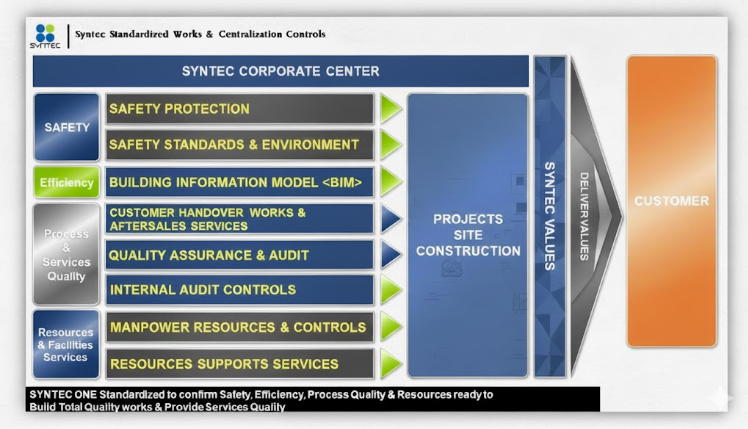
In conducting business, organizations must understand the relationship between the business and its stakeholders, in terms of both positive and negative impacts and interconnected issues. Businesses must implement a management approach known as systematic stakeholder engagement to address negative impacts and create positive impacts between the business and its stakeholders. This will lead to cooperation and the creation of shared value between the business and all stakeholders. The company is committed to fulfilling construction contracts received from partners, while simultaneously managing impacts on stakeholders throughout the business's value chain in the best possible way. This is achieved by demonstrating the relationship of activities related to business operations, which reflects that "the company is ready to add value to the business by delivering value to relevant stakeholders in each activity throughout the business's value chain, from foundation construction to the best possible delivery of construction work to customers."
Stakeholder Analysis
Stakeholder Analysis
| Stakeholder Type | Stakeholders | Stakeholder Expectations | Response to Expectations | Communication Activities |
|---|---|---|---|---|
| External stakeholders | 2923 · Description: Customers | 1. High-quality deliverables are received as stipulated in the contract. 2. Deliverables are received within the timeframe specified in the contract. 3. Quality deliverables are achieved within the allocated budget. | 1. Deliver quality works and services that meet standards and are committed to continuously raising construction standards.
2. Deliver works in accordance with the timeline specified in the contract.
3. Conduct customer satisfaction evaluations. | 2938 · Description: Visit · 2941 · Description: Online Communication · 2942 · Description: Internal Meeting · 2943 · Description: External Meeting · 2945 · Description: Complaint Reception · 2947 · Description: Satisfaction Survey |
| External stakeholders | 2904 · Description: Investors or investment institutions · 2913 · Description: Shareholders | 1. Securities prices have increased in value.
2. Good and consistent dividend payments.
3. The company demonstrates continuous, stable growth and sustainable development.
4. Accurate and timely disclosure of information.
5. Good, transparent, and verifiable corporate governance. | 1. Perform duties with honesty and integrity, and conduct all operations with due care and fairness to all shareholders. 2. Do not seek personal or third-party benefits by utilizing any non-public company information, and do not engage in any actions that may create a conflict of interest with the company. 3. Promote anti-corruption in all forms. | 2939 · Description: Press Release · 2943 · Description: External Meeting · 2944 · Description: Annual General Meeting (AGM) · 2945 · Description: Complaint Reception · 2949 · Other name: Investment promotion activities such as Investor Relations / Roadshow / Analyst Meeting / SET Opportunity Day, etc. · Description: Others |
| Internal stakeholders | 2921 · Description: Employees · 2922 · Description: Expatriate | 1. Receiving fair compensation and benefits comparable to those in the same industry
2. Career advancement and job security
3. Good welfare benefits at work
4. Employee potential development through training on technology and the use of ready-made software
5. Safety and a good working environment
6. Affordable, safe, and conveniently located accommodation benefits
7. Fair treatment of employees, non-discrimination, and respect for human rights | 1. The company has a compensation policy that aligns with its short-term and long-term performance, and it uses OKRs for performance measurement. 2. Appropriate employee welfare benefits are provided, including a provident fund, social security fund, medical welfare benefits, and annual health check-ups. 3. There is an employee training plan to enhance employee potential. 4. Human rights management guidelines for recruitment stipulate that the company adheres to ethical principles, without discrimination based on race, religion, skin color, or gender. Suitability for the responsibilities will be considered on a case-by-case basis. 5. Affordable accommodation is provided near the head office to assist employees with convenient commuting. | 2941 · Description: Online Communication · 2942 · Description: Internal Meeting · 2945 · Description: Complaint Reception · 2946 · Description: Employee Engagement Survey · 2947 · Description: Satisfaction Survey · 2948 · Description: Training / Seminar |
| External stakeholders | 2899 · Description: Suppliers · 2900 · Description: Business partners · 2911 · Description: Raw material distributors · 2912 · Description: Product distributors · 2917 · Description: Raw material manufacturers | 1. Provide opportunities for all partners to submit bids for work and sales prices to the company with transparency, fairness, and equity. 2. Establishing good partnerships and long-term relationships. 3. Timely payment. | 1. Has a policy to treat business partners fairly, ensures transparent and verifiable selection of business partners, adheres to ethical trade competition frameworks, avoids monopolistic or restrictive trade practices, and opposes all forms of corruption.
2. Prepares appropriate contract formats.
3. The company aims to develop knowledge collaboratively with business partners, maintain good relationships, and set clear objectives for the quality of goods and services that provide value for money.
4. Pays business partners on time according to agreed payment terms. | 2938 · Description: Visit · 2941 · Description: Online Communication · 2945 · Description: Complaint Reception · 2947 · Description: Satisfaction Survey |
| External stakeholders | 2898 · Description: Competitors | 1. Free business competition
2. Conduct business fairly | 1. Operate within the framework of fair competition rules. 2. Do not seek confidential information from competitors. 3. Do not make malicious accusations or aim to damage the reputation of business competitors. | 2939 · Description: Press Release · 2941 · Description: Online Communication |
| External stakeholders | 2894 · Description: Creditor | 1. Financial discipline and debt repayment capability | 1. Repay debts to creditors strictly according to the specified terms. 2. In the repayment of loans, interest, and responsibilities related to collateral or guarantees, the company strictly adheres to the agreed-upon contracts and conditions. 3. In the event of significant occurrences affecting the financial status and potentially impacting outstanding debts, the company will inform creditors to jointly seek preventive or corrective measures to avoid damages. 4. Strictly comply with all conditions stipulated by creditors. | 2941 · Description: Online Communication · 2947 · Description: Satisfaction Survey |
| External stakeholders | 2902 · Description: Community | 1. Conduct construction safely and minimize impacts on communities, society, and the environment.
2. Prevent or reduce pollution generated by construction activities.
3. Utilize resources efficiently. | 1. Has a construction policy that prioritizes community, society, and environment, and strictly adheres to relevant laws. 2. Implements accident prevention measures and controls operations and waste discharge to meet standard criteria. 3. Conducts environmental quality monitoring in various ongoing construction projects to ensure compliance with standards and no adverse impact on neighboring communities. 4. Consistently supports activities that foster social, community, and environmental well-being. 5. Listens to feedback and suggestions from communities around project areas to find ways to mitigate potential impacts, and addresses complaints upon notification of issues from the community. | 2939 · Description: Press Release · 2940 · Description: Social Event · 2941 · Description: Online Communication · 2945 · Description: Complaint Reception |
| External stakeholders | 2931 · Description: Government agencies and Regulators | 1. Compliance with all requirements, regulations, and laws in all aspects.
2. Provision of information or execution of various operations accurately, appropriately, and timely. | 1. Comply with laws and regulations.
2. Oppose all forms of corruption.
3. Provide information and good cooperation when requested by regulatory bodies. | 2938 · Description: Visit · 2939 · Description: Press Release · 2941 · Description: Online Communication · 2943 · Description: External Meeting · 2944 · Description: Annual General Meeting (AGM) · 2945 · Description: Complaint Reception |
Environmental Policy & Guidelines
Has an Environmental Policy
Yes
Policy Description
Syntec Construction Public Company Limited (“the Company”) is committed to operating with an awareness of its environmental responsibilities, in line with the company's vision: “To be a leader in the construction industry, continuously developing in terms of quality, time, cost, safety, social responsibility, and environmental efficiency.” Furthermore, the company continuously improves its work processes to prevent pollution and potential impacts, conserve natural resources, reduce energy consumption, and foster environmental responsibility among employees.
Guidelines
Manage operations with the goal of preventing environmental impacts, while continuously reviewing and evaluating the company's performance.
Strictly adhere to all environmental laws, regulations, and practices.
Select technologies and operational procedures that meet environmental standards, with consideration for controlling and treating pollutants before discharge.
Foster awareness among employees at all levels regarding their responsibility for environmental preservation, and promote the optimal utilization of resources.
Review environmental management operations at specified intervals to facilitate continuous improvement.
The company prioritizes environmental management by including construction environmental assessment topics as part of the project owner satisfaction survey for projects commissioned to the company. The assessment results are then used as guidelines for developing and improving the company's operations.
Disclose the company's environmental information accurately and transparently through appropriate channels.
Consistently support activities that promote environmental protection.
Select environmentally friendly and reusable materials.
Environmental Guidelines
| Guideline |
|---|
| Electricity Management |
| Fuel Management |
| Renewable/Clean Energy Management |
| Water Management |
| Waste Management |
| Air Quality Management |
| Noise Pollution Management |
Environmental Policy Review
Policy Reviewed This Year
Yes
Review Details
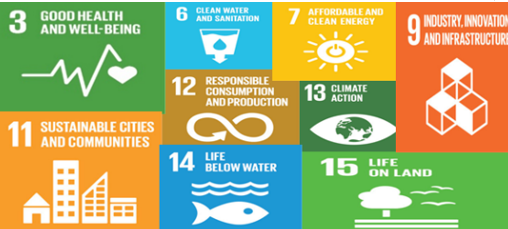
Establishing clear and measurable environmental goals will help us achieve sustainable development (SDGs), especially in sustainable consumption and production, and the long-term preservation of the world's natural resources, in accordance with the following key SDG goals:
Goal 3: Ensure healthy lives and promote well-being for all at all ages (Ensure healthy lives and promote wellbeing for all at all ages)
Goal 6: Access to clean water and sanitation (Clean Water and Sanitation)
Goal 7: Ensure access to affordable, reliable, sustainable, and modern energy for all (Ensure access to affordable, reliable, sustainable and modern energy for all)
Goal 9: Build resilient infrastructure, promote inclusive and sustainable industrialization, and foster innovation (Build resilient infrastructure, promote inclusive and sustainable industrialization and foster innovation)
Goal 11: Make cities and human settlements inclusive, safe, resilient, and sustainable (Make cities and human settlements inclusive, safe, resilient and sustainable)
Goal 12: Ensure sustainable consumption and production patterns (Ensure sustainable consumption and production patterns)
Goal 13: Take urgent action to combat climate change and its impacts (Take urgent action to combat climate change and its impacts)
Goal 14: Conserve and sustainably use the oceans, seas, and marine resources for sustainable development (Conserve and sustainably use the oceans, seas and marine resources for sustainable development)
Goal 15: Protect, restore, and promote sustainable use of terrestrial ecosystems, sustainably manage forests, and combat desertification.
Policies & Guidelines Changed
| Change |
|---|
| Electricity Management |
| Fuel Management |
| Renewable/Clean Energy Management |
| Water Management |
| Waste Management |
| Biodiversity Management |
| Greenhouse Gas and Climate Change Management |
| Air Quality Management |
| Noise Pollution Management |
Energy — Plan & Guidelines
Has an Energy Management Plan
Yes
Plan Description
The company recognizes that the world's population is currently increasing, which is one cause of extensive natural resource consumption, leading to pollution in water, air, waste, toxic substances, noise, and subsequent global warming, all of which impact humans and the overall ecosystem. Therefore, the company encourages all parties to foster a good consciousness in utilizing all resources efficiently and to their maximum potential. Guidelines:
Efficient resource utilization means using only what is necessary to ensure resources last longer and provide maximum value, such as using both sides of a sheet of paper.
Support reuse, for example, wastewater from construction is treated in a pond for sedimentation before being reused to spray construction areas to reduce dust.
The company implements electricity-saving measures by refraining from using lights in the office during lunch breaks. The result not only saves electricity costs but also reduces the consumption of natural resources and helps mitigate global warming.
Setting targets for electricity and/or fuel management
Management | Base Year | Goals | Target Year |
Office Energy Consumption | 2023 | Reduce electricity consumption by 2% compared to 2023. | 2027 |
On-site machinery/equipment | 2024 | Reduce fuel consumption by 3% per 100 million Baht project value. | 2027 |
Renewable Energy | 2025 | Pilot use of Solar Cells in offices/construction sites | 2027 |
Data Reporting | 2025 | 100% of major projects must report monthly energy data. | 2027 |
Establishing clear and measurable environmental goals will help us achieve sustainable development (SDGs), particularly in sustainable consumption and production, and in preserving the world's natural resources for long-term sustainability, in accordance with the following key SDG targets:
Goal 6: Ensure availability and sustainable management of water and sanitation for all.
Goal 7: Ensure access to affordable, reliable, sustainable and modern energy for all.
Goal 9: Build resilient infrastructure, promote inclusive and sustainable industrialization and foster innovation.
Goal 12: Ensure sustainable consumption and production patterns.
Goal 13: Take urgent action to combat climate change and its impacts.
Goal 15: Protect, restore and promote sustainable use of terrestrial ecosystems, sustainably manage forests, combat desertification, and halt and reverse land degradation and halt biodiversity loss.
Energy — Electricity Consumption
Electricity Consumption
| Metric | Current Year | Previous Year | Two Years Ago |
|---|---|---|---|
| Total electricity consumption within the organization (Kilowatt-Hours) | 447,544.03 | 316,017.97 | 227,668.7 |
| Electricity purchased for consumption from non-renewable energy sources (Kilowatt-Hours) | 318,932.1 | 261,799.61 | 187,033.18 |
| Electricity purchased or generated for consumption from renewable energy sources (Kilowatt-Hours) | 128,611.93 | 54,218.36 | 40,635.52 |
Energy — Fuel Consumption
Fuel Consumption
| Metric | Current Year | Previous Year | Two Years Ago | Remark |
|---|---|---|---|---|
| Crude oil (Barrels) | ||||
| Coal (Metric tonnes) | * 8 Sources of Information: Office of Natural Resources and Environmental Policy and Planning (ONEP) — Current Grid Emission Factor | IPCC AR6 Emission Factors for Oil | GHG Protocol Scope 3 Calculation Guidance | |||
| Jet fuel (Litres) | ||||
| Diesel (Litres) | 1,175,169.42 | 863,072.6 | 821,809.04 | |
| Gasoline (Litres) | 54,958.03 | 55,149.58 | 27,630.95 | |
| Fuel oil (Litres) | ||||
| Natural gas (Standard cubic feet) | ||||
| LPG (Kilograms) | ||||
| Steam (Metric tonnes) |
Energy — Targets
Has Set Targets
Yes
Targets
| Target | Base Year | Target Year | Target Change (%) | Unit | Per Unit (Intensity) | Per Unit — Please Specify |
|---|---|---|---|---|---|---|
| Reduction of electricity purchased for consumption | 2,023 | 2,027 | 2 | Kilowatt-hour | ||
| Reduction of fuel consumption | 2,024 | 2,027 | 3 | Litres | Litre of product | Litre of product |
Energy — Performance & Outcomes
Has Performance Results
Yes
Performance Description
Syntec Construction Public Company Limited is committed to efficient energy use at every stage of its operations, from design, machinery selection, field office management, and procurement, to fostering energy awareness among personnel. The aim is to continuously reduce energy consumption, greenhouse gas emissions, and operational costs.
Project design and planning
The company has integrated energy management guidelines from the initial stages of projects to ensure maximum energy efficiency in the field. Key operational results include:
Plan temporary office locations to optimize natural light direction and air circulation, reducing reliance on electricity for lighting and air conditioning.
Select construction machinery and equipment with high energy efficiency, conforming to manufacturer standards, to reduce consumption during operation.
Develop a plan for energy efficiency inspection and monitoring before construction begins, to assess risks and establish preventive energy-saving measures for each project.
Equipment and machinery usage
The company systematically controls the energy consumption of machinery to extend its lifespan, reduce fuel costs, and decrease carbon emissions. Key measures include:
Scheduled Preventive Maintenance to reduce losses from decreased efficiency.
Measures to stop machinery when not in use (Anti-idling) to reduce unnecessary fuel consumption.
Temporary office buildings ( Site Office)
The company prioritizes electricity usage in field offices, which are continuously used during projects. The operational results are as follows:
Use LED light bulbs and automatic on/off timer systems to reduce energy loss outside working hours.
Control air conditioner temperature at 26 C or higher, in accordance with government energy-saving guidelines.
Energy-friendly procurement
The company has established energy conditions and standards in the subcontractor selection process, as well as in equipment procurement.
Specify energy efficiency qualifications in the Terms of Reference (TOR) and contracts for contractors and material suppliers.
Emphasize energy-saving label products such as Label No. 5 and Energy Star to select energy-efficient electrical equipment.
Personnel behavior
The company believes that energy conservation can be sustainable through the participation of personnel at all levels, thus continuous operations are carried out as follows:
Organize annual energy conservation training to enhance employees' skills and understanding.
Promote the submission of ideas to enhance energy efficiency and implement suitable proposals for pilot testing and expansion to other sites.
Energy management performance results
Syntec Construction Public Company Limited continuously implements energy measures in both offices and factories to enhance energy efficiency, reduce costs, and decrease greenhouse gas emissions. The company promotes efficient electricity usage in its head office through various measures, such as:
Encourage employees to use stairs instead of elevators.
Set up automatic light and air conditioner shutdown systems during lunch breaks and after work hours, maintaining an air conditioner temperature of ≥ 25 C in accordance with government guidelines.
Campaign "Turn Off When Not in Use" for computer equipment and lighting.
Instruct safety officers/housekeepers to check and turn off equipment in all areas after work hours.
The company has installed a 110kW solar power generation system for production and use within the machinery and materials warehouse section (Bang Sai Plant).
Key operational results for 2025 are as follows:
Greenhouse Gas Inventory (GHG Inventory) preparation
The company prepares its annual Greenhouse Gas Inventory for 2025 according to the GHG Protocol Corporate Accounting and Reporting Standard, covering the following three scopes:
Water — Plan & Guidelines
Has a Water Management Plan
Yes
Plan Description
Syntec Construction Public Company Limited recognizes the importance of water resources for human life, the environment, and the country's economic development. Water is a finite resource that cannot be replenished. Inefficient use can impact ecosystems, communities surrounding construction sites, and the company's operational costs.
The company has therefore established a responsible water management policy and plan, covering efficient water utilization, wastewater quality control, and reduction of environmental impacts, in accordance with good practices and relevant laws.
Measures for Water Conservation and Efficient Resource Utilization
Publicize and post campaign signs instructing employees and workers to turn off water after every use.
Utilize a recirculating water reuse system for activities that do not require clean water quality, such as washing vehicle wheels entering and exiting the project site, and washing construction surfaces.
Maintain the plumbing system efficiently to reduce leaks in pipes and equipment.
Emphasize calculating water usage and monitoring results to reduce unnecessary water waste.
Wastewater Management and Water Quality Control Measures: The company implements wastewater management for wastewater generated from construction activities and consumption within the project as follows:
Prohibit the disposal of waste or construction debris into drainage pipes and ensure proper waste segregation.
Once the project's main drainage system is constructed, wastewater from construction activities will be discharged through settling ponds and trash screens before being released into the public drainage system.
Provide sufficient restrooms and sanitary facilities with wastewater treatment systems before discharge into the environment.
Control wastewater from cleaning and general activities to enter drainage ditches and wastewater treatment systems in accordance with standards.
Install a pre-fabricated septic tank with a septic-filter-aeration system in areas with high toilet usage to elevate the quality of wastewater discharge to meet legal standards.
Wastewater quality from key sources, such as the machinery and materials warehouse (Bang Sai Plant), is regularly inspected, and results are recorded for reporting to relevant agencies.
Water Resource Risk Management: The company assesses potential risks arising from water usage, such as:
Water scarcity during the dry season.
Impacts of wastewater on communities and the environment.
System leaks lead to excessive water consumption.
By continuously developing prevention, monitoring, and improvement plans to ensure that the project can operate without affecting stakeholders.
Setting Water Management Goals
Base Year | Goal | Target Year |
2023 | Reduce water consumption rates at the head office and worker camps by ≥ 3% by 2025. | 2027 |
Continuous | Wastewater quality not exceeding standard values. | Continuous |
2023 | Increase the proportion of water reuse in cleaning activities to ≥ 30% for all new projects annually. | 2027 |
Efficient water use is a crucial factor in sustainable development and is linked to several SDGs as follows:
Goal 6: Clean Water and Sanitation Efficient water use ensures appropriate water consumption and reduces water loss, which positively impacts sustainable water resource management. Furthermore, it helps ensure that everyone has adequate access to clean water and sanitation.
Goal 12: Responsible Consumption and Production Efficient water use supports sustainable consumption and production by responsibly utilizing water resources and reducing unnecessary water consumption in various production processes, thereby mitigating environmental impacts and natural resource depletion.
Goal 13: Climate Action Efficient water use contributes to reducing energy consumption associated with water supply, such as pumping and water treatment, which helps lower greenhouse gas emissions from water production processes. Furthermore, it aids in adapting to climate change, which causes water scarcity issues.
Water — Withdrawal, Discharge & Consumption
Water Withdrawal, Discharge & Consumption
| Metric | Current Year | Previous Year | Two Years Ago |
|---|---|---|---|
| Total water withdrawal (Cubic meters) | 351.36 | 369.52 | 221.91 |
| Total water withdrawal by third-party water (Cubic meters) | 351.36 | 369.52 | 221.91 |
| Total water withdrawal by surface water (Cubic meters) | |||
| Total water withdrawal by groundwater (Cubic meters) | |||
| Total water withdrawal by seawater (Cubic meters) | |||
| Total water withdrawal by produced water (Cubic meters) | |||
| Percentage of wastewater treated before discharge (%) | |||
| Total water discharge (Cubic meters) | 0 | ||
| Total water discharge to third-party water (Cubic meters) | |||
| Total water discharge to surface water (Cubic meters) | |||
| Total water discharge to groundwater (Cubic meters) | |||
| Total water discharge to seawater (Cubic meters) | |||
| Total water consumption (Cubic meters) | 351.36 | 369.52 | 221.91 |
| Recycled water (Cubic meters) |
Water — Targets
Has Set Targets
Yes
Targets
| Target | Base Year | Target Year | Target Change (%) | Unit |
|---|---|---|---|---|
| Reduction of water withdrawal | 2,023 | 2,027 | 10 | Cubic meters |
Water — Performance & Outcomes
Has Performance Results
Yes
Performance Description
The company has continuously implemented a system for recording and monitoring water consumption at its Head Office. In 2025, the total water consumption was recorded as 351.36 cubic meters, with total water-related expenses amounting to 5,270.40 Baht.
As a result of campaigns and water-saving measures implemented within the office building, such as replacing water-efficient equipment, inspecting plumbing systems for leaks, and raising awareness for efficient water usage, the water consumption decreased by 18.16 cubic meters compared to 2024, representing a reduction rate of approximately 4.91%.
Additionally, the company has implemented a Water Reuse project for activities that do not require potable water quality, such as area cleaning, plant watering, and other suitable applications. This initiative aims to reduce the demand for tap water, lower the cost burden of water procurement, and minimize wastewater discharge into the environment, thereby mitigating the risk of pollution from wastewater and supporting sustainable water resource utilization.
Water Consumption Volume | 2023 | 2024 | 2025 |
Net Water Consumption (cubic meters) | 221.91 | 369.52 | 351.36 |
Change compared to the previous year | Increased by 66.52% | Decreased by 4.91% | |
Greenhouse Gas Emissions tCO2e | 0.0360 | 0.599 | 0.0570 |
Waste — Plan & Guidelines
Has a Waste Management Plan
Yes
Plan Description
Waste and refuse management is a critical process for environmental preservation and mitigating the adverse effects of improper waste disposal. A waste and refuse management plan involves clear steps and methods for sorting, collecting, recycling, or safely disposing of waste to maximize benefits for the environment and society.
Source Waste Separation
Source separation of waste is the most crucial step in waste management, as categorizing waste makes subsequent handling easier. The main waste categories are as follows:
Recyclable Waste: e.g., paper, plastic, glass, metal.
Organic Waste: e.g., food scraps, leaves, branches.
Hazardous Waste: e.g., batteries, chemicals, used light bulbs.
General Waste: e.g., non-recyclable waste.
Proper Waste Collection
After source waste separation, waste collection must be carried out correctly to prevent contamination or the spread of pathogens, as well as to reduce odor problems caused by organic waste. Appropriate waste collection methods are as follows:
Emphasize closing trash bin lids to prevent waste dispersion or odor.
For hazardous waste, durable and leak-proof containers should be used.
Waste Transportation and Temporary Storage
Collected waste must be transported to temporary waste storage areas or waste management centers approved by relevant authorities. Temporary waste storage should consider the following factors: the area must be clean, safe, and free from waste leakage. A waste separation system should be provided in the storage area, and convenience for transporting waste to disposal or recycling points should be considered.
4. Recycling and Reuse
Recycling is a process that can help reduce waste volume and the consumption of natural resources. It involves separating recyclable waste such as paper, plastic, metal, and glass, processing them, and reusing them as raw materials for new product manufacturing. This process helps reduce the amount of waste requiring disposal and conserves resources.
5. Waste and Refuse Disposal
For non-recyclable or hazardous waste, safe disposal methods must be employed, such as:
Landfilling: Disposing of waste in landfills equipped with systems to prevent groundwater contamination.
Incineration: Burning waste in incinerators with controlled temperatures and hazardous gas emissions.
Waste-to-Energy: Utilizing certain types of non-recyclable waste to produce energy.
Education and Awareness Building
Raising public awareness about waste and refuse management is crucial, as it encourages people to separate waste correctly and enhances the efficiency of waste management.
Disseminating correct information and methods for waste management.
Providing incentives or encouraging people to participate in environmental conservation activities.
Monitoring and Evaluation
Monitoring and evaluating waste management is crucial to ensure the effectiveness of the waste management plan. This can be tracked through: the volume of waste separated and recycled, the success of awareness campaigns, and issues encountered during implementation.
In summary, waste and refuse management is a process that requires cooperation from all sectors, including the public, government, and businesses. It involves steps from source waste separation, proper waste collection, recycling, safe waste disposal, and raising public awareness. Effective waste management will help reduce environmental impacts and create a sustainable environment for the future.
Setting Waste and Refuse Management Goals
Target | Base Year | Target Year |
Correctly separate no less than 100% of all waste. | 2023 | 2027 |
Reduce organizational paper consumption by 50% through electronic document systems. | 2023 | 2027 |
Increase the recycling rate to at least 50% of total waste volume. | 2023 | 2027 |
Reduce waste from operational processes and construction sites by no less than 20%. | 2023 | 2027 |
Transfer 100% of hazardous waste to authorized disposal contractors. | 2023 | 2027 |
The aforementioned project involves waste management through paper recycling and reduction of paper usage, which can be directly linked to several SDGs, specifically the relevant main goals:
Goal 6: Clean Water and Sanitation Effective management of non-hazardous and organic waste can help reduce water contamination and mitigate water pollution problems caused by improperly disposed waste.
Goal 12: Responsible Consumption and Production
Reintroducing paper into the recycling process is part of reducing waste volume and efficient resource utilization, which helps decrease the use of new resources and the amount of waste disposed of. This promotes sustainable consumption and production.
Recycling plastic bottles and plastic cups helps reduce the consumption of new resources, decreases the amount of waste sent to landfills, and minimizes new plastic production. Plastic recycling reduces energy consumption in manufacturing and the use of natural raw materials, making the production process more sustainable.
Goal 13: Climate Action
Paper recycling helps reduce deforestation, which positively contributes to reducing greenhouse gas emissions and mitigating the impacts of climate change.
Recycling plastic bottles and plastic cups helps reduce greenhouse gas emissions from new plastic production processes and plastic waste landfills. Plastic disposed of in landfills or incinerated may release methane (CH4) and carbon dioxide (CO2). Recycling helps mitigate the impacts of climate change.
Goal 14: Sustainable Use of Marine Resources (Life Below Water)
Improperly managed plastic bottles and plastic cups often accumulate in seas and oceans, affecting marine life and ecosystems. Recycling helps reduce the amount of plastic waste that poses a threat to marine organisms.
Goal 15: Sustainable Use of Terrestrial Resources (Life on Land)
Reducing logging for paper production and recycling paper helps mitigate deforestation, thereby preserving terrestrial resources sustainably.
Plastic bottles and plastic cups discarded in various locations can harm nature and terrestrial ecosystems. Recycling these wastes helps reduce pollution and maintain the balance of terrestrial ecosystems.
Waste — Generation, Disposal & Recycling
Waste Generation, Disposal & Recycling
| Metric | Current Year | Previous Year | Two Years Ago |
|---|---|---|---|
| Total waste generated (Kilograms) | 18,097 | 15,199.5 | 13,959.43 |
| Non-hazardous waste (Kilograms) | 18,097 | 15,199.5 | 13,959.43 |
| Non-hazardous waste - Landfilling (Kilograms) | |||
| Non-hazardous waste - Incineration (with energy recovery) (Kilograms) | |||
| Non-hazardous waste - Incineration (without energy recovery) (Kilograms) | |||
| Non-hazardous waste - Other disposal operations (Kilograms) | |||
| Hazardous waste (Kilograms) | |||
| Hazardous waste - Landfilling (Kilograms) | |||
| Hazardous waste - Incineration (with energy recovery) (Kilograms) | |||
| Hazardous waste - Incineration (without energy recovery) (Kilograms) | |||
| Hazardous waste - Other disposal operations (Kilograms) | |||
| Total reused/recycled waste (Kilograms) | |||
| Reused/Recycled non-hazardous waste (Kilograms) | |||
| Reused non-hazardous waste (Kilograms) | |||
| Recycled non-hazardous waste (Kilograms) | |||
| Reused/Recycled hazardous waste (Kilograms) | |||
| Reused hazardous waste (Kilograms) | |||
| Recycled hazardous waste (Kilograms) |
Waste — Targets
Has Set Targets
Yes
Targets
| Waste Type | Disposal Approach | Target | Base Year | Target Year | Target Change (%) | Unit |
|---|---|---|---|---|---|---|
| Non-hazardous waste | 2758 · Description: Reuse · 2759 · Description: Recycle · 2760 · Description: Landfilling | Increase waste utilization | 2,023 | 2,027 | 10 | Kilograms |
Waste — Performance & Outcomes
Has Performance Results
Yes
Performance Description
Correct waste separation for no less than 100% of all waste.
The company has implemented systematic waste separation measures, including clearly designated waste bins in office and project areas, along with continuous communication and education for employees and contractors. As a result, the company has achieved 100% correct and complete waste separation, meeting its set targets. These operations help reduce the volume of waste requiring landfill disposal, increase opportunities for resource recovery, and promote sustainable environmental practices within the organization.
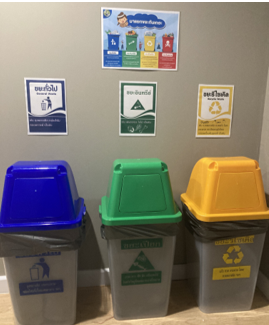
Waste separation image, trash bins
Reduce paper consumption in the organization by 50% through electronic document systems, with the following projects:
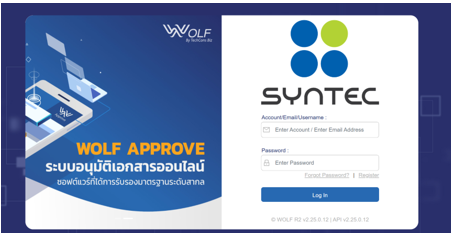
WOLF Approve Online Document Approval System
The company has implemented a paper reduction project within the organization by utilizing the WOLF Approve online document approval system as the primary tool for managing work processes in a paperless format. This covers internal document approvals such as purchase requisitions, expense approvals, departmental approvals, and other operational documents within the organization.
The system enables employees to create, forward, and track document statuses in real-time, reducing the steps involved in printing, storing, and delivering paper documents. This has allowed the company to enhance operational efficiency, shorten approval times, and support sustainable, environmentally friendly business practices. Furthermore, it has reduced paper consumption from online document approvals by 464,325 sheets, equivalent to 928.65 reams, and reduced greenhouse gas emissions by 2.6 tCO2e.
Equivalent to planting approximately 260 - 280 trees, saving about 40 trees, and reducing costs by approximately 102,151.50 Baht (compared to A4 80 gsm paper priced at 110 Baht).
Paper Reduction through Electronic Document System (ERP)
The company has implemented a paper reduction project within the organization by utilizing Microsoft Dynamics 365, an AI-driven ERP system, to manage work processes in a paperless format. This aims to enhance operational efficiency and reduce environmental impact.
The system has been implemented to cover key organizational processes, including Sales, Service, Finance and Accounting, and Supply Chain Management. Various applications can be used both independently and integrated within a single system, ensuring data accuracy, timeliness, and real-time accessibility.
The implementation of this system reduces the need for document printing, paper file storage, and traditional approval processes. This has enabled the company to significantly reduce paper consumption within the organization, accelerate work processes, and enhance data management efficiency, while also supporting business operations aligned with sustainable development guidelines.
Furthermore, it has reduced paper consumption from data processing through the system by 7,390 reams and reduced greenhouse gas emissions by 20.69 tCO2e. This has saved approximately 314 large trees, equivalent to planting 2,069 new trees (and waiting for them to grow for 1 year), and saved approximately 812,900 Baht (compared to A4 80 gsm paper priced at 110 Baht).
Increase the recycling rate to at least 50% of total waste volume through the following projects:
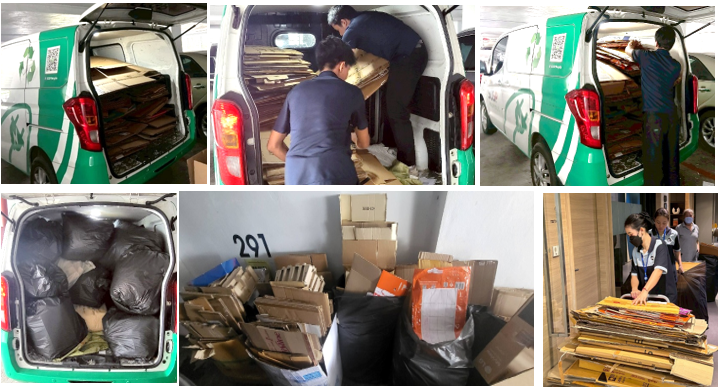
Paper sent for recycling through the company's partnership with SCG.
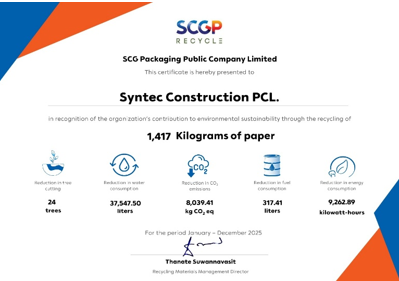
For used paper sent to SCG in 2025, the volume of paper was 1,417 kg, which can reduce greenhouse gases by 8,039.41 kg of carbon dioxide (CO2). This represents an increase of 5,047.41 kg from 2024 (as paper recycling was halted in 2024 and seriously resumed with SCG in 2025).
Reasons for the significant increase
The company has clearly defined its sustainability policy, focusing on reducing resource consumption and efficiently managing waste.
Digital systems and various applications have been implemented to replace paper in work processes, supporting long-term paper reduction.
The process of sending used paper for recycling is part of circular resource management (Circular Economy), aligning with the company's ESG approach.
This achievement reflects the company's commitment to reducing environmental impact and continuously supporting global warming reduction goals.
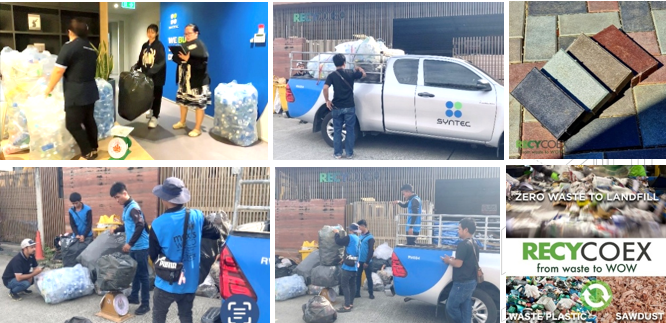
Disposal of plastic bottles, plastic cups, non-hazardous waste, and reuse (Recycle)
In 2025, the project's objectives were well-received by the company's employees. The volume of sorted plastic bottles, plastic cups, and organic waste throughout the year is as follows:
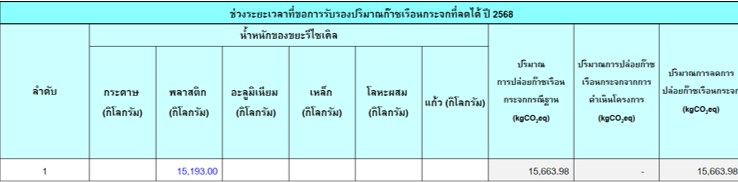
The total weight of recycled waste, including plastic bottles and plastic cups, is 15,193 kg, which can reduce greenhouse gas emissions by 15,663.98 kg of carbon dioxide (CO2).
For the next phase, the company plans to expand public relations for proper waste separation and disposal projects, including collecting recyclable waste from all construction units at the head office. This will serve as a central hub for delivering recyclable waste to directly responsible agencies, such as Recycoex Company Limited, for collecting and developing new products like eco-friendly artificial wood (Composite Wood).
Organic Waste Transfer
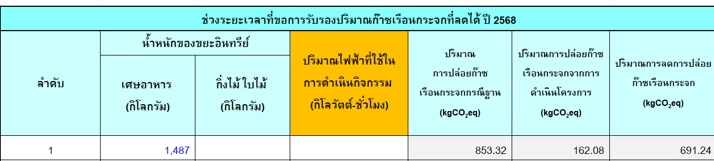
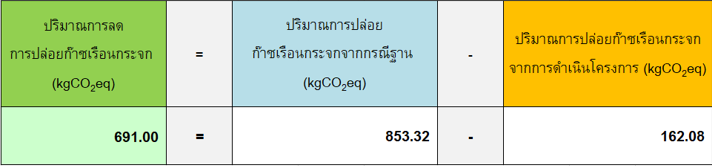
Total weight of organic waste, including food scraps, vegetables, and fruits 1,487 kg can reduce greenhouse gas emissions by 691.24 kg of carbon dioxide (CO2).
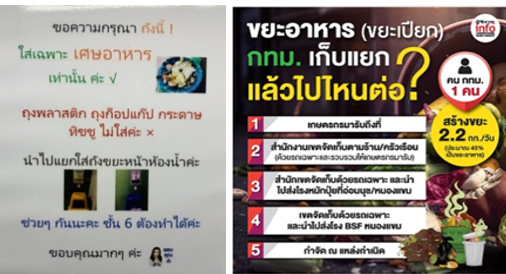
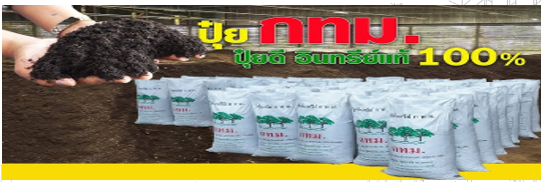
Daily, cleaning staff on each floor of the office collect sorted organic waste, such as food scraps, vegetables, and fruits. This waste is weighed together in the evening for delivery to the condominium's juristic person. The juristic person then collects organic waste from all companies in the building and hands it over to the Bangkok Metropolitan Administration (BMA) waste collection officers. The BMA will send this waste to its organic waste composting plant to be processed into fertilizer.
4. reduce waste from work processes and construction sites by no less than 20%.
Circular Material (Reuse) Project from Worker Camp Construction Process
The company focuses on maximizing resource utilization under the principle of 3R especially Reuse (Reusing) to reduce environmental impact and manage costs effectively through the following key projects:
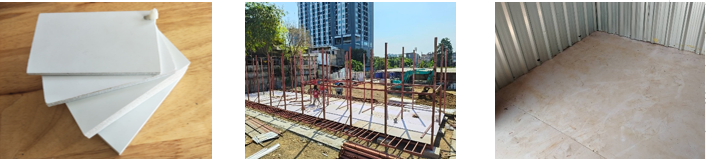
Floor material modification: Developed from using general plywood sheets to Plastwood sheets (Plastwood) which is a material highly resistant to weather and moisture.
Reuse Efficiency: Plastwood sheets enable the company to Can be reused an average of 3 times. Significantly reduce material wastage rate.
Enhancing Quality of Life: In addition to cost-effectiveness, Plastwood material helps keep worker accommodations clean, aesthetically pleasing, and free from mold accumulation, leading to improved hygiene and quality of life for workers.
Project Status: The company currently has a total of 16 worker camps. Material improvements and reuse have been progressively implemented since 2022, and all camps will be fully upgraded to maintain sustainable living and environmental standards.
The objective was set to maximize the reuse of floor resources (Plastwood sheets) up to 3 times to reduce construction costs for the aforementioned worker camps.
Cost Comparison Table for Worker Camp Flooring Materials
Number of times floor sheets are used | Cost per use of Plastwood sheets / unit (40 rooms) | |
Red Meranti Plywood (Baht) | Plastwood sheets (Baht) | |
1 | 78,000 | 103,400 |
2 | 78,000 | 10,340 |
3 | 78,000 | 10,340 |
Total | 234,000 | 124,080 |
Project Success Summary
Efficiency Aspect: The company successfully achieved its goal of reusing materials 3 times as planned, representing a success rate of 100%
Sustainability Aspect: In addition to reducing costs by up to 109,920 Baht After one cycle of use, the Plastwood material remains in good condition and has the potential for more than 3 continuous uses, further increasing its value for subsequent worker camps.
Environmental Aspect: Significantly reduce demolition waste (Construction Waste) compared to using plywood, which must be discarded after each worker camp.
Value Received: In addition to increased profits from cost reduction, the company has also gained a positive image by conducting business in line with ESG (Environment, Social, and Governance) principles, particularly through reducing construction waste from worker camps and promoting a better quality of life for workers.
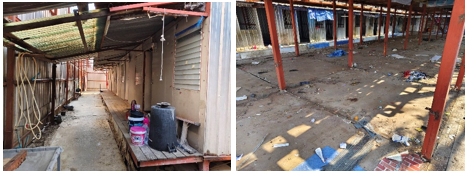
Worker accommodation using old plywood ( One Time)
Worker accommodation using new Plastwood sheets ( Reuse 3 Times)
GHG — Plan & Guidelines
Has a GHG Management Plan
Yes
Plan Description
2022 | 2023 | 2024 | |
Total Greenhouse Gas Emissions (tCO2e) | 2,992.00 | 30,884.48 | 65,237.46 |
Greenhouse Gas Emissions – Scope 1 (tCO2e) | 2,992.00 | 30,884.48 | 65,237.46 |
GHG — Emissions
GHG Emissions
| Metric | Current Year | Previous Year | Two Years Ago |
|---|---|---|---|
| Total GHG emissions (Metric tonnes of carbon dioxide equivalent) | 0 | 65,237.46 | 30,884.48 |
| Total greenhouse gas emissions 1 (Metric tonnes of carbon dioxide equivalent) | 0 | 65,237.46 | 30,884.48 |
| Total greenhouse gas emissions 2 (Metric tonnes of carbon dioxide equivalent) | |||
| Total greenhouse gas emissions 3 (Metric tonnes of carbon dioxide equivalent) |
GHG — Emissions Verification
Emissions Verified by a Third Party
No
GHG — Principles & Standards
Principles & Standards Applied
| Standard |
|---|
| 2671 |
GHG — Targets
Has Set GHG Targets
No
GHG — Performance & Outcomes
Has Performance Results
No
Environmental Legal Incidents
Legal Violation Incidents
| Metric | Current Year | Previous Year | Two Years Ago |
|---|---|---|---|
| Number of cases or incidents of legal violations or negative environmental impact (cases) | 0 | 0 | 0 |
Other Environmental Management
Plan Description
Biodiversity Management Plan
The company's construction activities will consider potential impacts on the surrounding environment, including trees, plant species, and wildlife. Therefore, the company implements various preventive measures to comply with relevant laws and regulations.
This involves emphasizing the principles of avoidance, reduction, restoration, and compensation when the company operates in areas with biodiversity. It also promotes stakeholder engagement, especially with communities surrounding the project, to ensure minimal impact on biodiversity. This includes selecting construction materials that do not originate from disputed areas or areas with environmental concerns for various construction projects, implemented rigorously through the company's procurement department.
Key Measures and Activities
Prevention of Ecosystem Impacts
Survey and establish a database of plant and animal species in the project area before commencing work.
Designate "temporary protection zones" around water sources, large trees, and animal habitats.
Plan machinery and transport vehicle routes to avoid sensitive areas.
Restoration and Conservation
Plant replacement trees at a ratio of no less than 1:1 of the affected area.
Support reforestation activities with local communities or agencies.
Pollution control affecting biodiversity
Install a water sediment trap system before discharging into nature.
Control dust, noise, and light pollution in the construction area.
Segregate hazardous waste and dispose of it through authorized entities.
Knowledge Enhancement and Participation
Train employees and contractors on biodiversity conservation.
Communicate and campaign through signs/posters in the project area.
Provide opportunities for community participation in conservation activities.
Setting Biodiversity Management Targets ( Targets)
The company has set conservation and biodiversity restoration targets to control and reduce the impacts of business operations that may affect ecosystems. The key targets are as follows:
Reduce impacts on ecosystems in the project area by at least 10% within 3 years.
Increase green space in office and project areas by at least 5% per year.
Plant replacement trees at a ratio of 1:1 of the area affected by project development.
Conduct surveys and establish a database of plant and animal species in the project area for 100% of new projects.
Physical Environmental Resources
Topography: During the construction phase, soil excavation for foundation construction and underground utility installation may lead to significant changes in the landscape. Therefore, the following preventive measures are implemented:
Construct buildings in accordance with specified plans and legal requirements.
Organize the construction area and store materials neatly.
The fence is 6.00 meters high, using galvanized metal sheets (Metal Sheet) along the entire 6.00-meter fence line. The structure is reinforced with steel box sections every 3 meters. The front of the construction area serves as an entrance/exit, with a solid project gate that can be opened and closed.
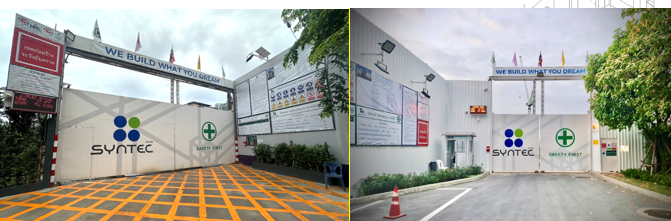
Soil Erosion
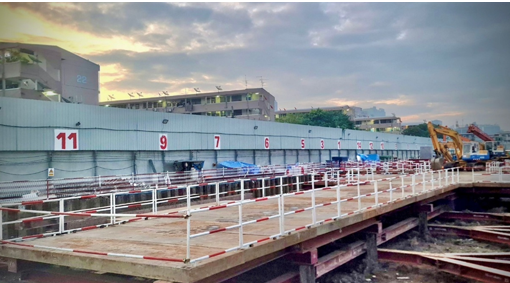
During the foundation construction phase, excavation/drilling of soil is required for both piles and project utilities to prevent soil erosion. Therefore, the following preventive measures are implemented:
Design a soil erosion prevention system, including driving sheet piles along all four sides of the land boundary to create a temporary earth retaining wall to prevent soil movement.
During rainfall, drainage channels must be dug around excavation pits or holes to divert water away from the excavated area. Water must also be drained from the pits or holes to prevent changes in soil conditions, which could pose a risk of soil collapse.
Do not pile soil near the opening of excavated pits; ensure piles are kept at a distance no less than the reach of an excavator arm from the pit opening.
Soil piles left for more than 3 days must be shaped to an appropriate slope for the soil type to prevent collapse due to operational disturbances or the weight of retained water in the soil.
Construct temporary project roads using concrete or steel plates to reduce vibration impacts.
Air Quality Management
To prevent impacts from dust and air pollution and to comply with legally mandated standards, the following measures are implemented to mitigate impacts:
Install dust screens along the entire height of the building under construction and maintain them in good condition throughout the construction period.
Ensure construction workers regularly clean the construction area daily, especially the floors of each building level under construction, to reduce dust accumulation, and sprinkle water before sweeping to minimize dust dispersion.
Ensure that construction materials such as soil, rocks, and sand stored on the project site are covered to prevent dust dispersion.
Ensure workers regularly sweep and clean roads within the construction area, including the front of the project entrance/exit, by sprinkling water before each sweep.
Require all trucks entering and exiting the project area to cover their beds to prevent dust dispersion and spillage of soil and construction materials.
Provide a wheel washing station at the project exit. All vehicles must wash their wheels before leaving the project area to prevent soil from being carried onto the road.
Installation of small water spray nozzles around the project to reduce PM 2.5 dust.
The company has quantitative environmental targets for air quality from construction, which must comply with the requirements of regulatory agencies, as follows:
Targets | Air Quality | |||||
TSP ( mg/m 3 ) | PM -10 ( mg/m 3 ) | CO ( ppm) | SO 2 24Hr ( ppm) | SO 2 1Hr ( ppm) | NO 2 ( ppm) | |
Standard Value | 0.33 2/ | 0.120 2/ | 30 1/ | 0.120 2/ | 0.300 3/ | 0.170 4/ |
Noise Pollution Management
Noise and Vibration Levels
Construct a dust and noise barrier fence, consisting of a steel frame with galvanized steel sheets on the outside, 2 meters high, around the project construction area, along with project entrance/exit gates, which can reduce noise levels by approximately 15-22 dB(A).
Keep entrance/exit gates closed at all times, except when vehicles are passing through.
Opt for bored pile foundation construction methods, which produce low noise levels.
Select low-noise technology and equipment for both construction and earthwork.
Designate specific areas by partitioning them into rooms for noisy activities such as cutting and grinding.
Regularly maintain construction tools, machinery, and equipment to ensure they are in good working condition.
Do not conduct activities that cause loud noise disturbing neighboring residents between 18:00 and 08:00 of the following day. If noise levels are found to disturb nearby residents, construction methods must be adjusted and/or noise reduction measures implemented to mitigate impacts on neighboring residents.
Limit the speed of vehicles transporting construction materials and equipment into the project area to 30 km/h in neighboring communities.
Excavate a deep trench along the construction boundary adjacent to neighboring buildings to cut off the transmission of surface vibration waves from the source to adjacent areas. Before construction, information boards detailing the project and contact numbers of responsible project officers must be installed for complaints regarding disturbances.
Ensure close supervision by engineers and control construction to adhere to engineering principles.
The company has quantitative environmental targets for noise levels from construction, which must comply with the requirements of regulatory agencies, as follows:
Quantitative Targets | Noise Level | |
Leq 24 hr. dB(A) | Lmax dB(A) | |
Standard Value | 70.0 | 115.0 |
Water Quality
The company has measures in place to manage wastewater generated from construction activities and from the consumption of construction workers, as follows:
Control workers to prevent disposal of solid waste into pipes or drainage systems.
Once the project's main drainage system is constructed, wastewater from construction activities will be discharged into the project's main drainage system, which will have intermittent settling ponds and waste traps before being discharged into the public drainage system.
Provide sufficient restrooms for construction workers, along with wastewater treatment from restrooms before discharge into the public drainage system.
Control wastewater from cleaning activities from flowing into drainage ditches, and treat sewage with prefabricated wastewater treatment tanks.
Install a prefabricated septic-filter-aeration wastewater treatment tank for treating wastewater from restrooms.
The company has quantitative environmental targets for water quality from construction, which must comply with the requirements of regulatory agencies, as follows:
Targets | Water Quality | |||
pH | BOD ( mg/I) | ( TSS) ( mg/I) | Oil & Grease ( mg/I) | |
Standard Value | ≤20 | ≤ 30 | ≤20 | |
Perennial Tree Planting Campaign and Green Space Creation Project at the Machinery and Material Warehouse Department (Bang Sai Plant)
Since 2024, the Machinery and Material Warehouse Department (Bang Sai Plant) has implemented a campaign to plant perennial trees, aiming to plant 1,000 trees to increase green spaces and promote environmental conservation. In 2025, an additional 338 trees were planted, bringing the current total of perennial trees planted to over 856. These include a variety of species such as Red Sandalwood, Teak, Mango, Yang Na, Sena, Jackfruit, Saraca, Ironwood, and many other species.
The objective of this project is to raise environmental awareness, reduce carbon dioxide (CO2) emissions, which are a major cause of global warming, and increase green spaces within the operational area to foster an environment conducive to creativity and employee productivity. Currently, most trees have grown, branched out, and provide clear shade, making the overall environment more pleasant. Working close to nature also helps enhance personnel efficiency and relaxation.
Employees — Plan & Guidelines
Has an Employee Management Plan
Yes
Plan Description
The company is committed to treating employees equally, fairly, and in compliance with relevant laws and ethical principles, fostering justice and respecting individual rights and freedoms without discrimination. These factors will enhance the company's capabilities and increase its value. We believe that the company's success stems from the valuable contributions of each individual and collaborative teamwork. All employees must be treated equally and be given opportunities for self-development to achieve career advancement and further meet the company's business objectives.
Guidelines
Establishing fair employment processes and conditions, considering qualifications suitable for the organization and the position, under the concept of human resource management. The company supports fair and non-discriminatory employment and provides appropriate compensation to employees based on their potential, knowledge, abilities, and experience, including performance evaluation under a fair performance appraisal process.
Providing various employee benefits as required by law, such as social security, and beyond what is legally mandated, such as provident funds, medical and dental care benefits, annual health check-ups, emergency loan benefits, educational scholarships for employees, and various types of financial assistance to employees as appropriate.
Respecting employee rights according to human rights principles, and strictly adhering to labor laws and various regulations related to employees.
Appointments, transfers, promotions, or demotions must be conducted with integrity, equality, and based on the appropriate knowledge and abilities of the employees.
Maintaining a safe working environment for the lives and property of employees.
Promoting personnel development by providing training, development programs, and participation in seminars in various professional fields to enhance the knowledge, abilities, and potential of personnel, ensuring continuous and consistent learning. This enables employees to utilize their knowledge and skills to their full potential and lead the organization to achieve its business objectives, offering opportunities for employees to advance in their careers and grow with the organization's success.
Avoiding any unfair actions that may affect the job security of employees, and treating employees with courtesy.
Emphasizing fundamental human rights to promote respect for rights and freedoms by not discriminating, ensuring equality without distinction of gender, race, nationality, religion, language, skin color, social class, or any other status. Not employing child labor, treating employees with respect and dignity, and not supporting human rights violations, including corruption.
Emphasizing the preservation of personal data of employees and job applicants, whether current employees or former employees, by establishing regulations and controlling access rights and dissemination of employees' personal data. This requires obtaining consent from employees for the company to access their data and various personal privacy rights.
Plan Areas
| Plan Area |
|---|
| Fair employee compensation |
| Employee training and development |
| Promoting employee relations and participation |
| Migrant/foreign labor |
| Child labor |
| Occupational health and safety in workplace |
Employees — Workforce
Workforce Data
| Metric | Current Year | Previous Year | Two Years Ago |
|---|---|---|---|
| Total number of employees (Persons) | 1,039 | 930 | 844 |
| Number of male employees (Persons) | 753 | 684 | 627 |
| Number of female employees (Persons) | 286 | 246 | 217 |
| Total employment of disabled persons (people) | 32 | 32 | 30 |
| Total disabled employees (people) | 25 | 25 | 24 |
| Total male disabled employees (people) | 16 | 18 | 19 |
| Total female disabled employees (people) | 9 | 7 | 5 |
| Total disabled workers who are non-employee (people) | 7 | 7 | 6 |
| Contributions to the fund for promoting and improving the quality of life for disabled persons | 1 | 1 | 1 |
| Total number of male employees in operational level (Persons) | 696 | 588 | 573 |
| Total number of male employees in management level (Persons) | 45 | 83 | 42 |
| Total number of male employees in executive level (Persons) | 12 | 13 | 12 |
| Total number of female employees in operational level (Persons) | 275 | 228 | 204 |
| Total number of female employees in management level (Persons) | 9 | 16 | 10 |
| Total number of female employees in executive level (Persons) | 2 | 2 | 3 |
Employees — Remuneration & Provident Fund
Remuneration & Provident Fund
| Metric | Current Year | Previous Year | Two Years Ago |
|---|---|---|---|
| Total disabled employees (people) | 598,333,322.85 | 517,025,289.41 | 488,532,973 |
| Total male employee remuneration (Baht) | 464,870,041.24 | 404,810,521.76 | 387,204,003 |
| Total female employee remuneration (Baht) | 133,463,281.61 | 112,214,767.65 | 101,328,970 |
| Number of employees eligible to participate in PVD (persons) | 817 | 750 | 717 |
| Total number of employees joining employee provident fund (Persons) | 592 | 568 | 581 |
| Percentage of total number of employees joining employee provident fund to total number of employees (%) | 56.98 | 61.08 | 68.84 |
| Number of PVD members / Total eligible employees (%) | 72.46 | 75.73 | 81.03 |
| Total amount of provident fund contributed by the Company (Baht) | 13,641,075 | 13,364,785 | 12,131,401 |
| Total amount of provident fund contributed by employee (baht) | 24,779,940 | 23,355,922 | 22,416,658 |
Employees — Training & Development
Training Data
| Metric | Current Year | Previous Year | Two Years Ago |
|---|---|---|---|
| Average employee training hours (Hours / Person / Year) | 18.7 | 7 | 19 |
| Employee development and training expenses (baht) | 4,697,986.67 | 3,795,330.67 | 2,413,144 |
Employees — Occupational Health & Safety
Occupational Health & Safety Data
| Metric | Current Year | Previous Year | Two Years Ago |
|---|---|---|---|
| Total number of lost time injury incidents by employees (Cases) | 41 | 51 | 37 |
Employees — Labour Relations
Labour Relations Data
| Metric | Current Year | Previous Year | Two Years Ago |
|---|---|---|---|
| Total voluntary resignations (Persons) | 92 | 107 | 108 |
| Male employees who voluntary resigned (Persons) | 72 | 25 | 79 |
| Female employees who voluntary resigned (Persons) | 20 | 82 | 29 |
| Percentage of employee turnover leaving the Company voluntarily (%) | 8.36 | 11.51 | 12.8 |
| Evaluation result of employee engagement | 1 | 1 | 1 |
Employees — Employee Representation
Employees Are Represented Collectively
No
Employees — Targets
Has Set Employee Targets
Yes
Targets
| Indicator | Target Areas | Base Year | Base Year — Description | Target Year | Target Year — Description |
|---|---|---|---|---|---|
| LTI Rate (incidents/million man-hours), Percentage of Safety Training | 2988 · Description: Safety and occupational health at work | 2,025 | Reduce Lost Time Injuries (LTI)
100% of employees and workers completed safety training | 2,026 | Decreased by 10%100% |
| Average training hours per person per year Number of training sessions for skilled workers | 2984 · Description: Employee training and development | 2,025 | Increase average employee training hours; Training for skilled construction workers | 2,026 | 15 hours or more
10 times or more |
| Number of disabled employees according to quota Number of discrimination complaints | 2989 · Description: Non-discrimination · 2985 · Description: Promoting employee relations and participation | 2,025 | Full compliance with legal employment of persons with disabilities
Non-discrimination | 2,026 | 100% 0 Cases |
| Percentage of contractor workers trained before site entry; Number of incidents detected | 2987 · Description: Child labor · 2988 · Description: Safety and occupational health at work | 2,025 | Contractor's employees undergo safety training prior to commencing work. There is no use of child labor, forced labor, or human trafficking. | 2,026 | 100% 0 Cases |
Employees — Performance & Outcomes
Has Performance Results
Yes
Performance Description
Human Rights
Syntec Construction Public Company Limited and its subsidiaries prioritize the human rights of their personnel and stakeholders. They respect individual rights as stipulated by law and do not engage in any business activities that may violate human rights.
The company has established a Non-Violation of Human Rights Policy, which outlines key issues such as safety, occupational health, and working environment, fair and equal treatment of employees, as well as employee rights and freedoms related to work, in accordance with laws and company policies.
The company has adopted the Human Rights Assessment Checklist from the National Human Rights Commission as a guideline for risk assessment and management, to assure stakeholders that the company genuinely recognizes the importance of conducting business in accordance with human rights principles.
The company has provided knowledge, communicated, and promoted understanding among employees regarding the human rights policy through departmental/divisional staff meetings, annual meetings, new employee orientation, and communication of policy updates via the "SYNTEC Connect" system to all employees. In 2025, the company provided clarification and knowledge to directors, executives, and employees as follows:
Board of Directors: 8 persons
Executives: 6 persons
Employees: 214 persons
This represents a 100% rate of awareness and understanding of the policy at the level set by the company. Furthermore, the company oversees its subsidiaries to operate in the same direction, with executives and employees having received clarification. Therefore, In 2025, no complaints or human rights violations were found.
Customers — Plan & Guidelines
Has a Customer Management Plan
Yes
Plan Description
Customer Relationship Management
The construction business is the Company's core business. Therefore, the Company's main clients are general real estate development companies, especially leading companies in the country listed on the Stock Exchange of Thailand, reputable limited companies with stable financial standing, as well as construction projects for government agencies. The Company will carry out construction according to the terms agreed upon in contracts with its clients.
Responsibility to Customers
The Company is committed to performing its best to ensure customers receive quality work. The Company regularly inspects the quality of its work to meet specifications and provides ample opportunities for customers to lodge complaints regarding the Company's work and services through various channels. Furthermore, all executives and employees are required to maintain customer confidentiality and not use customer secrets for their own benefit or for the undue benefit of related parties, thereby prioritizing customer satisfaction.
Customer Relationship Management Guidelines
In customer relationship management, the Company's crucial role in satisfying customers is to deliver quality construction as desired by the customer. Therefore, creating customer satisfaction is a key factor in customer relationship management. The Company employs three main approaches to customer relationship management: quality construction, cost control, and time management.
1) Quality Construction: The Company focuses on construction that adheres to professional engineering principles and incorporates modern technology into its operations to produce work that meets customer requirements and satisfaction.
2) Cost Control: The Company will manage construction costs appropriately, in line with the customer's planned budget, to enable customers to remain competitive in their business.
3) Time Management: The Company will deliver work to customers strictly according to the schedule specified in the employment contract.
Customer Satisfaction Development Policy and Guidelines (Project Owners)
Syntec Construction Public Company Limited ("the Company") conducts customer satisfaction evaluations (for project owners who engage the Company for construction projects). The objective is to identify issues and obstacles in construction operations, from project commencement to handover to the customer, in order to analyze their causes and determine improvement strategies. Furthermore, project owners will benefit from high-quality, timely operations at a reasonable price, in accordance with the terms of the employment contract. Such satisfaction measurements are conducted twice a year, in June and December.
Guidelines for Satisfaction Development / Service Quality Improvement
The Company has implemented the ISO9001:2015 Quality Management System to maintain operational standards, including reviewing operations from before contract commencement, during execution, and after project handover. Customers or clients will be treated in accordance with contractual obligations and professional work standards, ensuring that construction operations are successfully completed according to customer requirements, construction specifications, and the timelines specified in the contract.
Currently, the Company remains committed to developing its potential and maintaining operational standards in various aspects to its fullest capability. It is in the process of preparing and building understanding in various areas to integrate the Company into the ISO9001:2015 quality management system once officially announced by the regulatory body.
Plan Areas
| Plan Area |
|---|
| Responsible production and services for customers |
| Development of customer satisfaction and customer relationship |
| Protection of customer personal information |
Customers — Satisfaction Results
Customer Satisfaction Results
| Metric | Current Year | Previous Year | Two Years Ago |
|---|---|---|---|
| Evaluation results of customer satisfaction | 1 | 1 | 1 |
Customers — Targets
Has Set Customer Targets
Yes
Targets
| Indicator | Target Areas | Base Year — Description | Target Year | Target Year — Description |
|---|---|---|---|---|
| Customer Satisfaction Score (CSAT)Number of severe disputesTimely submission of project progress reportsNumber of complaints from communities around the work siteAdherence to ethics and anti-corruption practices | 3007 · Description: Responsible production and services for customers · 3008 · Description: Communication of product and service impacts to customers/consumers · 3009 · Description: Development of customer satisfaction and customer relationship · 3010 · Description: Consumer data privacy and protection | Customer Relationships
Communication and Contracts
Communication and Contracts
ESG / Sustainability
ESG / Sustainability | 2,027 | 3 points or more
0 cases
100%
Fewer than 10 items
100% |
Customers — Performance & Outcomes
Has Performance Results
Yes
Performance Description
Management Dimension | Target | Indicator ( KPI) | Target Value | Monitoring |
Customer Relations | Increase customer satisfaction | Customer Satisfaction Score (CSAT) | ≥ 3 points | Twice a year |
Communication and Contracts | Reduce contractual disputes | Number of severe disputes | 0 cases | Annually |
Communication and Contracts | Consistent communication of information with customers | Timely submission of project progress reports | 100% | Monthly |
ESG / Sustainability | Reduce impact on communities and the environment. | Number of complaints from communities around the work site | Fewer than 10 issues | Per project/month |
ESG / Sustainability | Enhance confidence in good governance | Adherence to ethics and anti-corruption | 100% | Annually |
Customer Satisfaction Assessment
The company conducts satisfaction assessments for project owners who commission the company for construction work, setting a target customer satisfaction score of no less than 3 points. These assessments are conducted to enable the company to identify problems and obstacles during the construction process, from project inception to handover to the client. The findings are then analyzed to determine root causes and establish guidelines for improvement and correction. Customer satisfaction levels are measured twice a year, in June and December.
Satisfaction level 4.0 – 3.1 means the standard must be maintained.
Satisfaction level 3.0 – 2.1 means acceptable, but work performance needs improvement.
Satisfaction level 2.0 – 1.1 means below the specified standard, requiring significant work performance improvement.
Satisfaction level 1.0 – 0.0 means critical, requiring a complete overhaul of the work system.
A comparison of the 2025 annual customer satisfaction survey results shows that the average score in December tended to increase across all evaluation phases compared to June. This improvement is a direct result of implementing concrete corrective actions based on feedback and issues with low scores from the previous period, specifically cleanliness in the work area (2.92 points) and fall protection (3.04 points). Consequently, the December evaluation results improved as follows:
1. Construction phase: Increased from 3.28 to 3.42 points.
2. Completion phase: Increased from 3.26 to 3.36 points.
3. Post-handover phase: Increased from 3.19 to 3.25 points.
This overall picture reflects the company's commitment to continuously enhancing the quality of construction work and safety standards to achieve maximum customer satisfaction.
Community & Social — Plan & Guidelines
Has a Community & Social Plan
Yes
Plan Description
Syntec Company has established a Community & Social Management Plan to ensure that its social operations are systematic, well-directed, and have clear objectives, emphasizing the creation of shared value between the company, the community, and all stakeholders.
Plan Areas
| Plan Area |
|---|
| Occupational health, safety, health, and quality of life |
| Water and sanitation management |
Community & Social — Targets
Has Set Community & Social Targets
Yes
Targets
| Indicator | Target Areas | Base Year | Base Year — Description | Target Year | Target Year — Description |
|---|---|---|---|---|---|
| - Number of complaints from the community- Time taken to resolve complaints- Number of meetings/consultations- Level of community satisfaction- Number of third-party accidents- Number of safety activities- Number of channels for receiving complaints- Response rate within the specified timeframe | 3041 · Description: Occupational health, safety, health, and quality of life | 2,023 | Impact of Construction on the Community, Community Relations, Community Safety, Communication and Complaint Handling | 2,027 | - Complaints reduced by ≥ 10% per year
- Resolved within 15 days ≥ 95%
- At least 1 time/project/year
- Zero incidents
- At least 1 activity/year
- 3 channels or more
- 100% response within 3 business days |
Community & Social — Performance & Outcomes
Has Performance Results
Yes
Performance Description
Syntec: Supporting Communities and Society
Syntec Company places importance on participating in the sustainable development of community quality of life and well-being. In 2025, the company has undertaken the following significant social projects and activities:
1. Organization of an Academic Seminar on Earthquake Prevention Engineering
The company collaborated with Sripatum University to organize a seminar on the topic of “Earthquake Prevention Engineering: Integrating Design and Construction Standards for Safety and Sustainability in the Thai Construction Industry” to promote knowledge and safety standards in the country's construction sector.
2. Blood Donation Project “Extending Lives for Humanity” No. 1 and 2
The company collaborated with Rajavithi Hospital to organize a blood donation drive for company employees to support the hospital's blood bank and assist patients requiring blood for treatment. This activity reflects the organization's commitment to sharing and helping fellow human beings.
3. Project “Adding Color, Fulfilling Dreams, Sharing with Our Youth”
The company provided building paint and educational supplies to Ban Thai Charoen School in Kabin Buri District, Prachin Buri Province, to contribute to the development of the educational environment and promote learning opportunities for youth in the community.
4. Assistance for Southern Flood Victims and Affected Animals
The company contributed donations to assist flood victims and affected animals through various agencies and organizations, including:
Thai Red Cross Society
M.R. Seni Pramoj Foundation
Alumni Association of the Faculty of Engineering, Prince of Songkla University
Faculty of Veterinary Science, Chulalongkorn University
Other Social Management
Plan & Outcomes — Description
Relationship management with neighboring communities
The company has a systematic approach to managing community relationships by:
-
Survey areas around the project from the outset to gather feedback and concerns
-
Assess environmental and social impacts
-
Implement measures to prevent and mitigate impacts
-
Organize community support activities according to the needs of the area
Key activities for the year:
-
Organize community relations activities during the New Year festival for communities neighboring the project
-
Build awareness and communication channels with the community to resolve issues transparently and promptly
Law Violation Incidents
Law Violation Incidents
| Metric | Current Year | Previous Year | Two Years Ago |
|---|---|---|---|
| The total number of cases or incidents of significant violations of laws or regulations regarding social and human rights (Cases) | 0 | 0 | 0 |
| The total number of cases or incidents that cause significant labor disputes (Cases) | 0 | 0 | 0 |
| The total number of cases or complaints related to consumer rights violations (Cases) | 0 | 0 | 0 |
| The total number of cases or complaints related to partner rights violations (Cases) | 0 | 0 | 0 |
| The total number of cases or incidents that cause disputes with the community/society (Cases) | 0 | 0 | 0 |
| The total number of cases or incidents related to cyber security or customer data breaches (Cases) | 0 | 0 | 0 |
| The total number of cases or incidents related to safety and occupational health at work (Cases) | 0 | 0 | 0 |